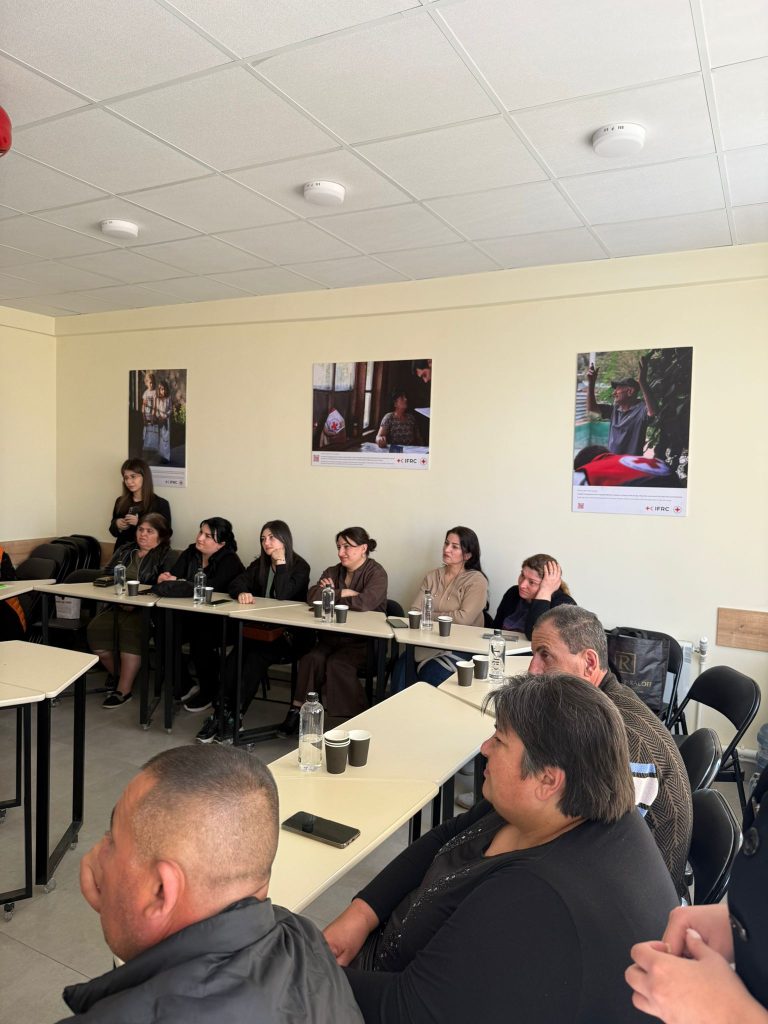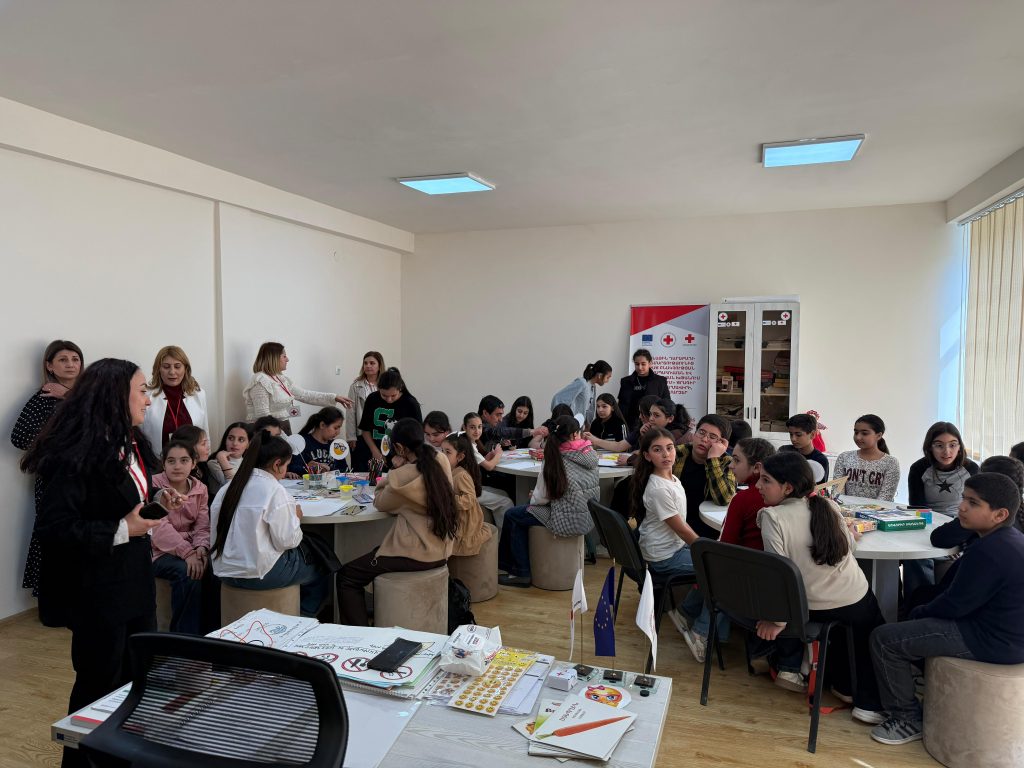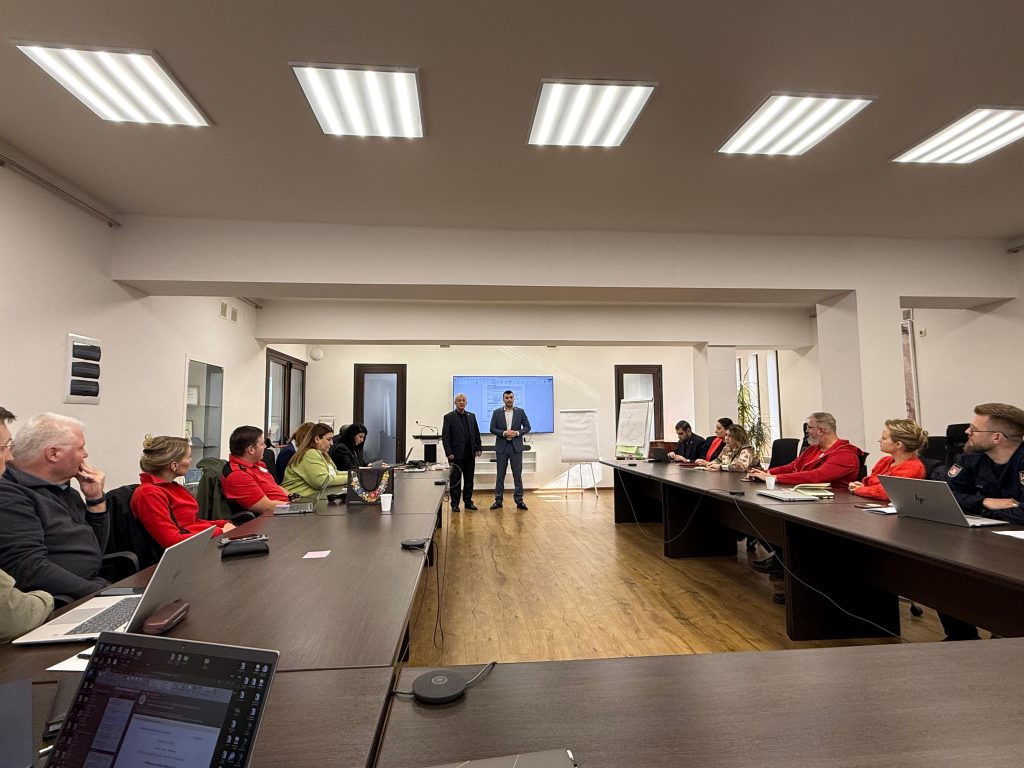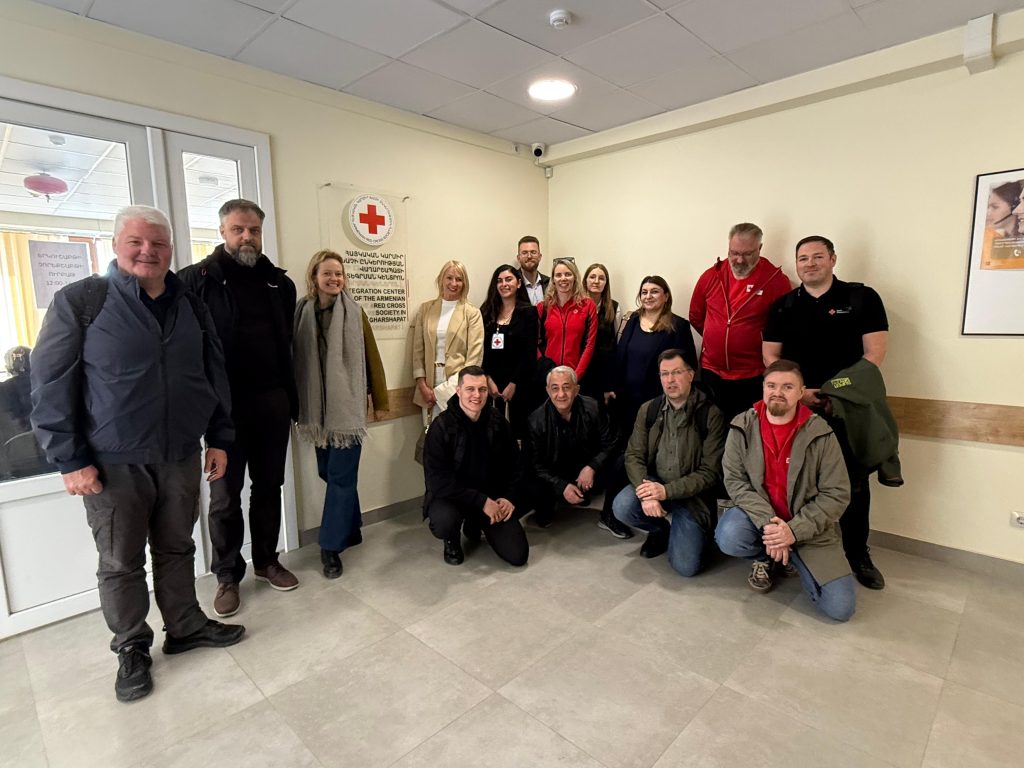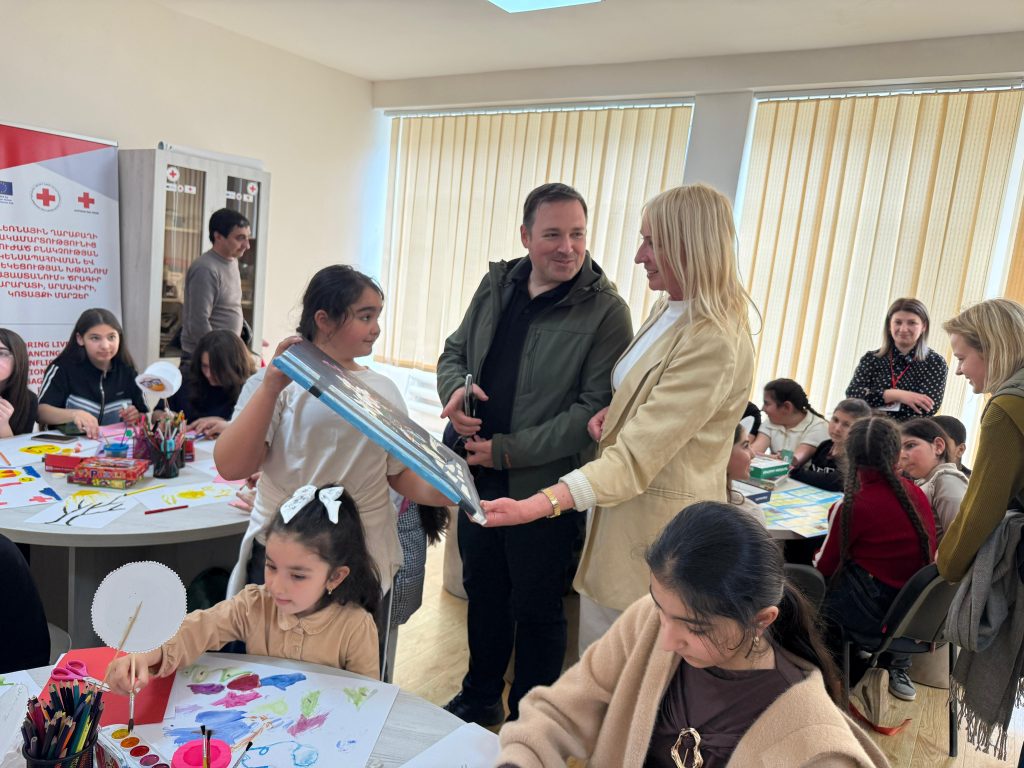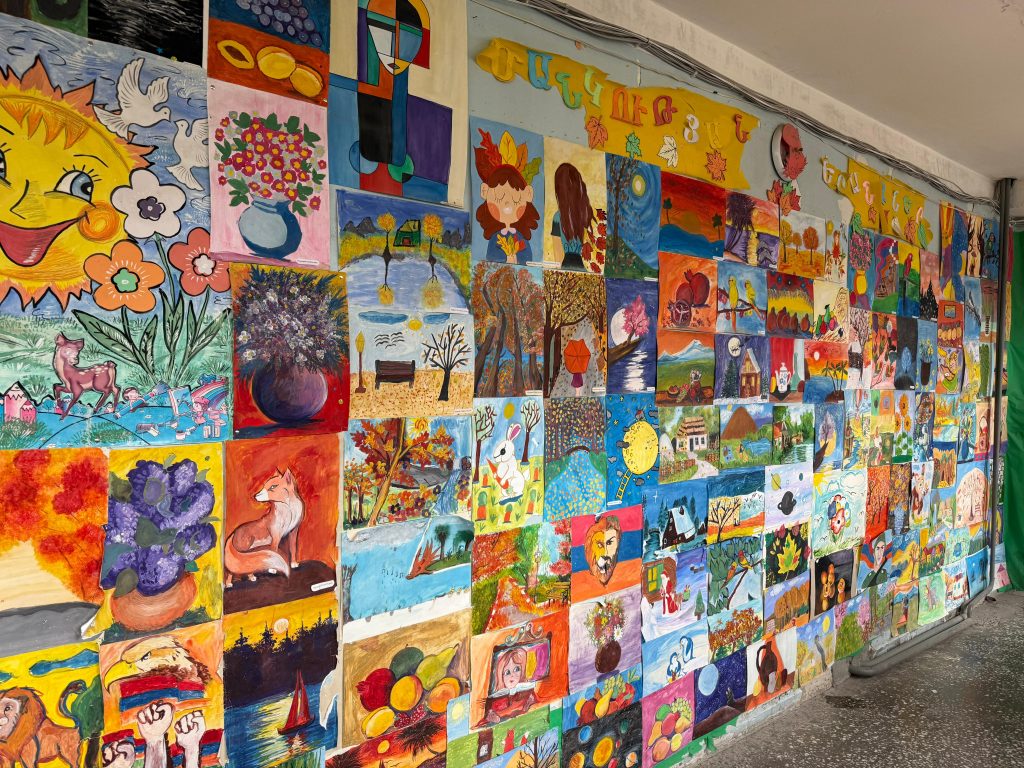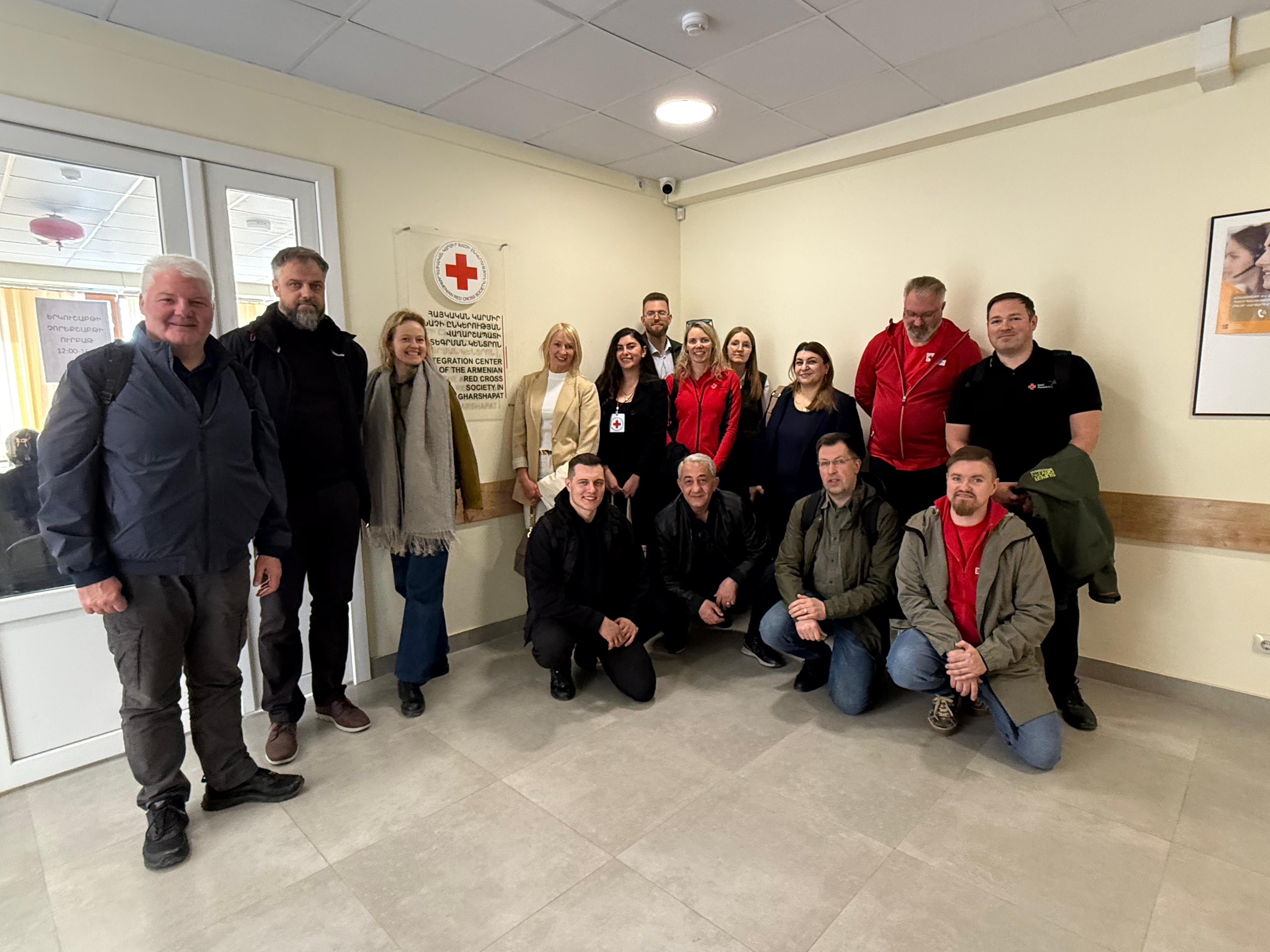
From March 31 to April 2, 2026, representatives from the Estonian, Latvian, and Lithuanian Red Cross Societies, alongside experts from the Latvian and Lithuanian civil protection authorities, participated in a high-level study visit to Armenia. The Latvian Red Cross (LSK) participated in this event within the framework of the international project “Baltic Civil Protection Cooperation for Complex Emergencies”, which is funded by the European Union Grant project “Knowledge for Action in Prevention and Preparedness (KAPP)”.
The visit, which took place in Yerevan and its surrounding areas, was hosted by the Armenian Red Cross Society and organized by the International Federation of Red Cross and Red Crescent Societies (IFRC) under the KAPP/BCD initiative. The primary objective of this initiative is to strengthen regional disaster preparedness, foster cooperation in civil protection, and promote regional learning. More details about the project can be found on the Latvian Red Cross Project Page.
Focus on Large-Scale Population Displacement and Crisis Coordination
The core focus of the study visit was to explore the unique experience gained by the Armenian Red Cross Society (ARCS) in providing humanitarian assistance during the Nagorno-Karabakh conflict, particularly regarding sudden and large-scale population displacement. The Baltic delegation closely analyzed the role of the ARCS in receiving and assisting refugees and internally displaced persons (IDPs), integrating state support systems, and delivering practical aid.
Special attention was dedicated to coordination mechanisms between Red Cross structures, state authorities, and international Movement partners. Participants analyzed operational challenges and practical solutions required in complex, rapidly changing emergency environments under high-pressure conditions.
Key Insights and Future Perspectives for the Baltic Region
The visit reaffirmed that in today’s geopolitical climate, preparedness planning must expand beyond the traditional scope of natural disasters. It is critically important for the National Societies of the Baltic States to develop readiness to respond to complex, conflict-related crises.
The following were identified as key priorities for future system enhancement in the Baltics:
- System Integration with State Authorities: Operational interoperability and seamless data/process exchange between humanitarian organizations and civil protection services.
- Decentralized and Scalable Response Models: Strengthening response capacities across the entire national territory (regional level), rather than relying solely on headquarters capacity, emphasizing localized readiness.
- Multi-Level Cooperation: The ability to operate effectively in complex environments involving a multitude of local and international actors simultaneously.
Armenia’s experience clearly demonstrated that flexibility and the rapid adaptation of response systems are the defining factors for successful humanitarian aid delivery. The practical insights gained will serve as a foundation for continuously improving civil protection systems in the Baltic States and building a more resilient society against any type of crisis.